Pradhan Mantri Fasal Bima Yojana
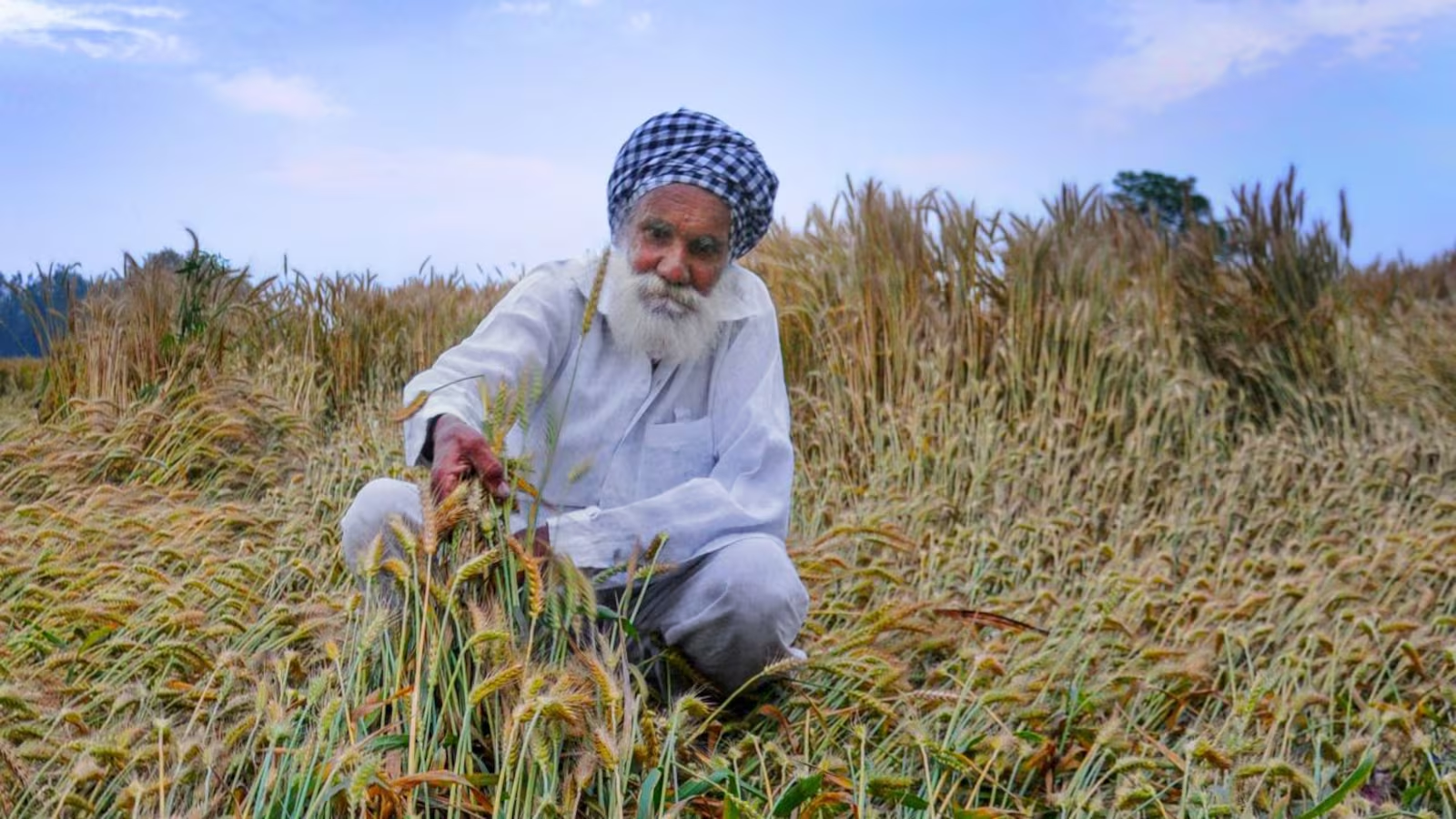
The Pradhan Mantri Fasal Bima Yojana (PMFBY) is a premier crop insurance initiative introduced by the Government of India in 2016, aimed at providing financial assistance to farmers facing crop failures due to natural disasters, pests, and diseases. This scheme seeks to stabilize farmers’ incomes, motivate them to embrace innovative agricultural methods, and improve their creditworthiness through a dependable insurance framework.
The main objective of PMFBY is to deliver affordable insurance coverage to all farmers, particularly small and marginal farmers who are most susceptible to climate and market uncertainties. The scheme encompasses all food and oilseed crops, as well as annual commercial or horticultural crops for which historical yield data exists. It supersedes previous insurance programs like the National Agricultural Insurance Scheme (NAIS) and the Modified NAIS, offering a more transparent and technology-enhanced system.
Under PMFBY, farmers must pay a minimal premium: 2% of the insured amount for Kharif crops, 1.5% for Rabi crops, and 5% for commercial and horticultural crops. The remaining premium cost is equally divided between the central and state governments. This structure results in a highly subsidized and affordable insurance premium, thus improving accessibility for all farmer categories.
Useful Updates
The scheme follows an area-based approach, defining insurance units for each notified crop. Claims are determined based on crop yield estimates derived from crop-cutting experiments (CCEs) carried out by the state government in collaboration with insurance providers. If the actual yield of the insured crop in a specific area falls below the threshold yield, the farmers insured in that area qualify for compensation.
To promote transparency and efficiency, PMFBY has integrated advanced technologies such as satellite imagery, drones, GPS-based data collection, remote sensing, and mobile applications for reporting field data. These technological advancements are designed to reduce human error and fraud in claim evaluations while accelerating the compensation process.
Useful Updates
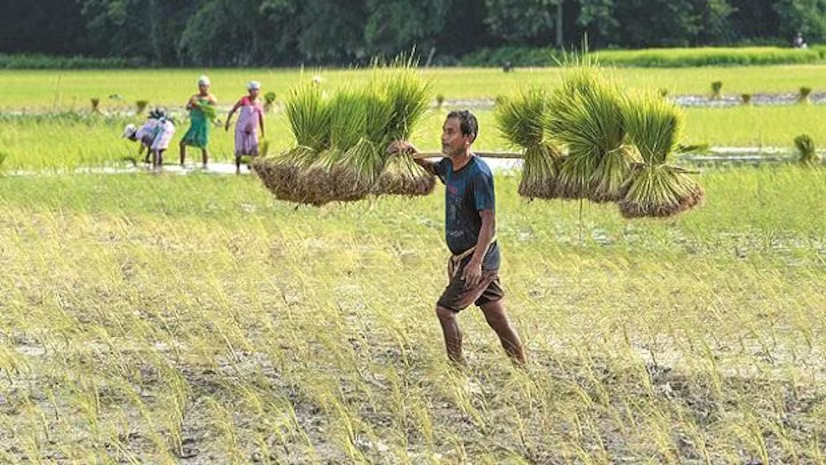
Farmers can enroll in the scheme via banks, common service centers, and online platforms. They also have the option to register through the PMFBY mobile application or website. While loanee farmers—those who have taken out agricultural loans—are automatically included in the scheme, non-loanee farmers have the choice to participate voluntarily. This initiative has played a significant role in increasing the number of insured farmers across India and alleviating the impact of crop losses.
A notable aspect of PMFBY is its provision of coverage throughout the entire crop cycle, from pre-sowing to post-harvest losses. This encompasses losses caused by localized disasters such as hailstorms, landslides, and flooding. Furthermore, the scheme offers compensation for post-harvest losses that occur within 14 days following the harvest.
Despite its advantages, PMFBY has encountered numerous challenges, such as delays in claim settlements, insufficient awareness among farmers, and the hesitance of private insurance firms in high-risk regions. To tackle these problems, the government has implemented various revisions to the scheme over time, including making it optional for all farmers, simplifying claim processes, and enhancing accountability through digital platforms.
WebsiteLink
The effects of PMFBY are clear in the financial security it has afforded millions of farmers, allowing them to bounce back from agricultural difficulties and persist in their farming endeavors. The scheme represents a significant move towards bolstering the agricultural economy, alleviating rural distress, and fostering resilience against climate change.
In summary, the Pradhan Mantri Fasal Bima Yojana is an essential initiative aimed at protecting farmers’ interests and ensuring food security in India. By providing affordable, comprehensive, and technology-driven crop insurance, the scheme seeks to transform Indian agriculture into a more secure and sustainable industry.