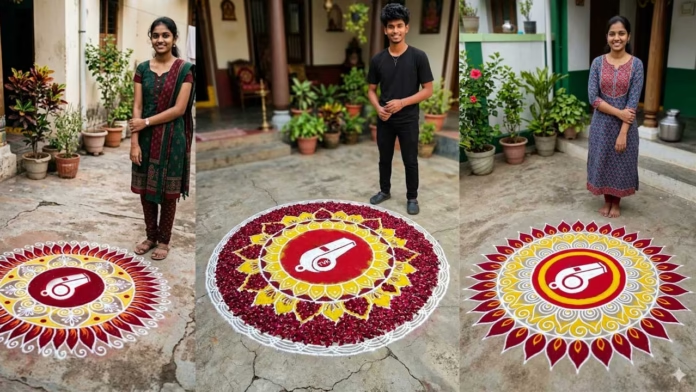
Introduction to The Whistle Kolam Concept
The “Whistle Kolam” concept is a creative fusion of traditional Indian courtyard art and modern digital portrait creation. A kolam is a decorative pattern drawn on the ground, commonly seen in South Indian homes, especially in Tamil Nadu. By combining this cultural art form with realistic portrait techniques, creators can produce visually striking images that feel both authentic and artistic. The “whistle” element often symbolizes a moment of life, movement, or expression—adding storytelling depth to the scene. This guide explains how to craft such a courtyard portrait using precise prompting, especially useful for AI image generation or digital art tools.
Understanding the Role of Precision Prompting
Precision prompting is the backbone of generating realistic and high-quality images. It involves giving clear, detailed, and structured instructions to an AI tool or design software. Instead of vague commands like “draw a kolam,” a precise prompt describes the environment, lighting, subject, and artistic style. For example, mentioning “a traditional South Indian courtyard at sunrise with a detailed white kolam pattern and a person gently blowing a whistle” provides clarity. The more specific your prompt, the better the output aligns with your vision. Precision helps avoid random or distorted results and ensures cultural elements are represented accurately.
Setting the Courtyard Scene
The courtyard is the foundation of the Whistle Kolam portrait. It should feel warm, lived-in, and culturally rich. Imagine a traditional Tamil house with red oxide flooring or stone tiles, surrounded by pillars and open space. The kolam is usually placed at the entrance, so positioning it correctly enhances realism. Adding elements like brass lamps, flower pots, or a wooden doorway can make the scene more immersive. Lighting is equally important—soft morning sunlight or golden evening light creates a natural and emotional atmosphere. Including details such as shadows and reflections helps the image feel grounded and real.
Useful Updates
Designing the Kolam Pattern
The kolam itself is the visual centerpiece. It should be intricate yet symmetrical, typically drawn using white rice flour. When crafting your prompt, describe the pattern clearly—whether it is geometric, floral, or a combination of both. You can include phrases like “intricate symmetrical kolam with fine white lines and delicate curves.” Adding slight imperfections can make it look hand-drawn rather than digitally perfect. You may also mention the texture of the ground so the kolam appears naturally blended with the surface. A well-designed kolam enhances the authenticity and artistic value of the portrait.
Incorporating the Human Element
A realistic courtyard portrait becomes more engaging when it includes a human subject. In the Whistle Kolam concept, the subject could be someone interacting with the environment—perhaps a person standing near the kolam, blowing a whistle, or observing it. The pose should feel natural and not overly staged. Describing clothing is important; traditional attire such as sarees or simple cotton outfits can strengthen cultural context. Facial expressions and body language should match the mood—calm, focused, or joyful. Including small details like hair movement or subtle gestures can make the portrait feel alive.
Balancing Realism and Artistic Style
While realism is key, adding a touch of artistic style can elevate the final image. This balance can be achieved by controlling textures, colors, and depth of field. For example, you can request “photorealistic quality with soft cinematic lighting and shallow depth of field.” This ensures the subject and kolam remain the focus while the background softly fades. Avoid over-stylization that may distort traditional elements. The goal is to maintain cultural authenticity while enhancing visual appeal through artistic techniques.
Useful Updates
Enhancing Details Through Layered Prompts
Layered prompting means building your description step by step. Start with the base scene, then add the kolam, followed by the subject, and finally lighting and style. For instance, your prompt could progress from “traditional courtyard” to “detailed kolam design,” then “person interacting with the scene,” and finally “warm natural lighting with high realism.” This structured approach helps AI tools understand each component clearly. It also allows you to refine specific parts without affecting the entire image. Layering ensures consistency and precision in the final output.
Common Mistakes to Avoid
Many creators make the mistake of using overly generic prompts, which leads to inconsistent or unrealistic results. Another issue is overloading the prompt with too many conflicting details. For example, mixing different cultural styles or lighting conditions can confuse the system. Ignoring proportions and perspective can also make the image look unnatural. To avoid these problems, keep your prompt focused, culturally accurate, and logically structured. Always review and refine your prompt based on the output you receive.
Prompt Used for Execution:
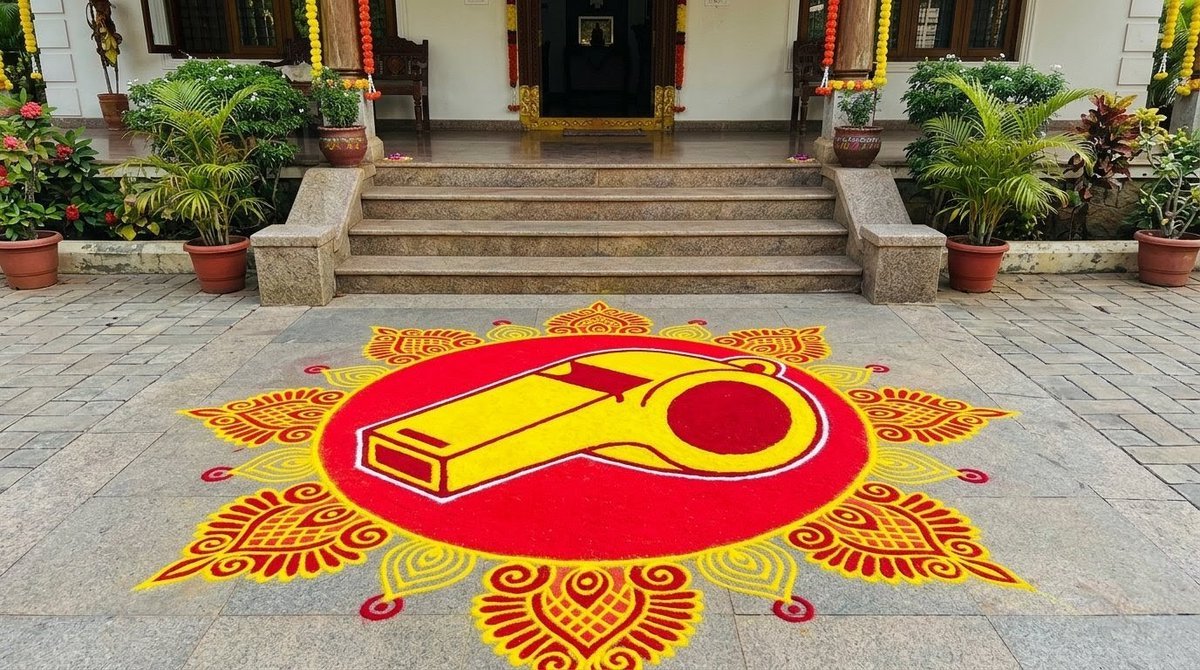
Create a realistic 9:16 photograph of a young Indian person standing in an outdoor house courtyard, posing naturally near a large decorative kolam on the ground.
Person Position (VERY STRICT)
Person standing upright beside the kolam (not on it). Feet placed clearly on plain cement floor, at least 1–2 feet away from kolam edge. Body slightly angled toward the kolam. Half-body to full-body visible (head to feet preferred). Arms relaxed naturally (one hand lightly holding the other or resting by side). Natural smile, looking at camera.
STRICT NEGATIVE (IMPORTANT)
No selfie pose. No hand extended toward camera. No phone visible. No standing on kolam. No touching kolam.
Camera & Composition
Shot by another person (third-person perspective). Eye-level to slightly elevated angle (not extreme top-down). Balanced composition. Kolam fully visible in frame. Subject placed slightly left or right (rule of thirds).
Kolam Design (STRICT)
Large circular mandala kolam. Outer: deep red flame-shaped petals. Inner: yellow + white curves and patterns. Fine white outlines. Powder texture. Perfect symmetry.
Center Circle (STRICT)
Outer ring: red. Middle: yellow. Inner: red. Clean sharp edges.
Symbol
Bold white exact TVK whistle symbol with its lines at center. Powder-drawn style.
Environment
Outdoor Indian house courtyard (வீட்டின் முன்புறம்). Cement floor with cracks, stains. Background: house wall, pillars, plants, pots (slightly blurred). Realistic home setting.
Lighting & Quality
Natural daylight. Soft shadows. DSLR quality. Sharp focus. 8K detail. “candid natural pose, realistic human posture, professional photography, no distortion
Final Thoughts on Crafting a Perfect Whistle Kolam Portrait
Creating a Whistle Kolam courtyard portrait is both an artistic and technical process. It requires an understanding of cultural elements, attention to detail, and the ability to communicate ideas clearly through prompts. By focusing on precision, realism, and storytelling, you can produce images that are visually stunning and emotionally engaging. Whether you are using AI tools or manual design techniques, the key lies in balancing tradition with creativity. With practice and thoughtful prompting, you can transform a simple courtyard scene into a masterpiece that celebrates both art and culture.