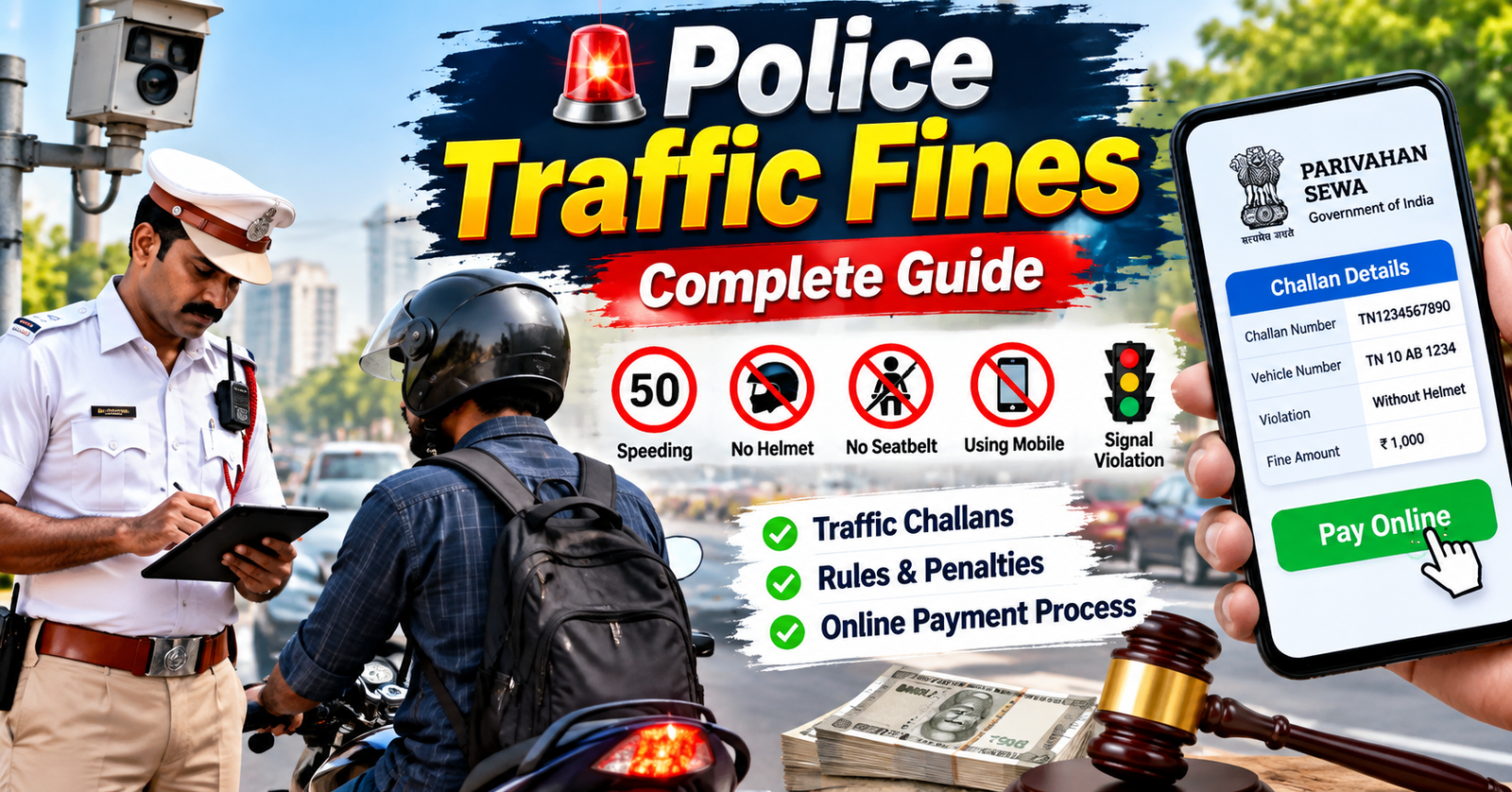
Police Traffic Fines: Complete Guide to Traffic Challans, Rules and Online Payment
Traffic rules are created to make roads safer for drivers, passengers, pedestrians, cyclists, and other road users. When a person violates a traffic rule, the police or authorized traffic enforcement system may issue a traffic challan, which is a formal notice recording the violation and the applicable fine. Today, many traffic challans can be checked and paid online, making the process faster and more convenient.
Understanding traffic fines, challan rules, payment methods, and dispute procedures can help vehicle owners avoid unnecessary problems. This complete guide explains how traffic challans work, how to check them online, how to make an online payment, and what precautions should be taken while dealing with traffic fines.
What Is a Traffic Challan?
A traffic challan is an official record issued when a driver or vehicle owner is found violating a traffic regulation. Common violations include speeding, jumping a red light, driving without a valid licence, not wearing a helmet, driving without a seat belt, using a mobile phone while driving, and parking in restricted areas.
Useful Updates
A challan may be issued directly by a traffic police officer or generated through electronic enforcement systems such as CCTV cameras and automatic number-plate recognition systems. The challan generally contains information such as the vehicle registration number, date and location of the violation, type of offence, applicable penalty, and payment status.
Common Reasons for Traffic Fines
There are several reasons why a vehicle owner may receive a traffic fine. The exact penalty depends on the applicable law, the nature of the offence, the state or jurisdiction, and whether the violation is a repeat offence.
Some commonly recorded violations include overspeeding, red-light violations, driving without a valid driving licence, riding without a helmet, driving without a seat belt, using a mobile phone while driving, dangerous or negligent driving, improper parking, and certain vehicle-document violations. Drivers should always follow the latest traffic rules applicable in their location instead of relying on old fine amounts found on social media or unofficial websites.
Useful Updates
How Traffic Challans Are Issued
Traffic challans can be generated through different enforcement methods. During a roadside inspection, a traffic police officer may stop a vehicle and record the violation electronically or manually. In other situations, CCTV cameras and automated traffic monitoring systems can identify violations and capture the vehicle registration number.
For camera-based violations, the registered vehicle owner may receive information about the offence through an official communication channel. Depending on the system used, the challan may be uploaded to an online database where the vehicle owner can view the violation and payment details.
What Information Is Available on a Challan?
A traffic challan normally provides important information that allows the vehicle owner to understand why the fine was issued. Depending on the enforcement system, the record may show the challan number, vehicle registration number, date and time of the offence, location, violation description, fine amount, and current payment status.
Some electronic challans may also contain supporting evidence, such as an image captured by a traffic camera. Vehicle owners should carefully check these details before making a payment, especially if they do not remember committing the reported violation.
How to Check a Traffic Challan Online
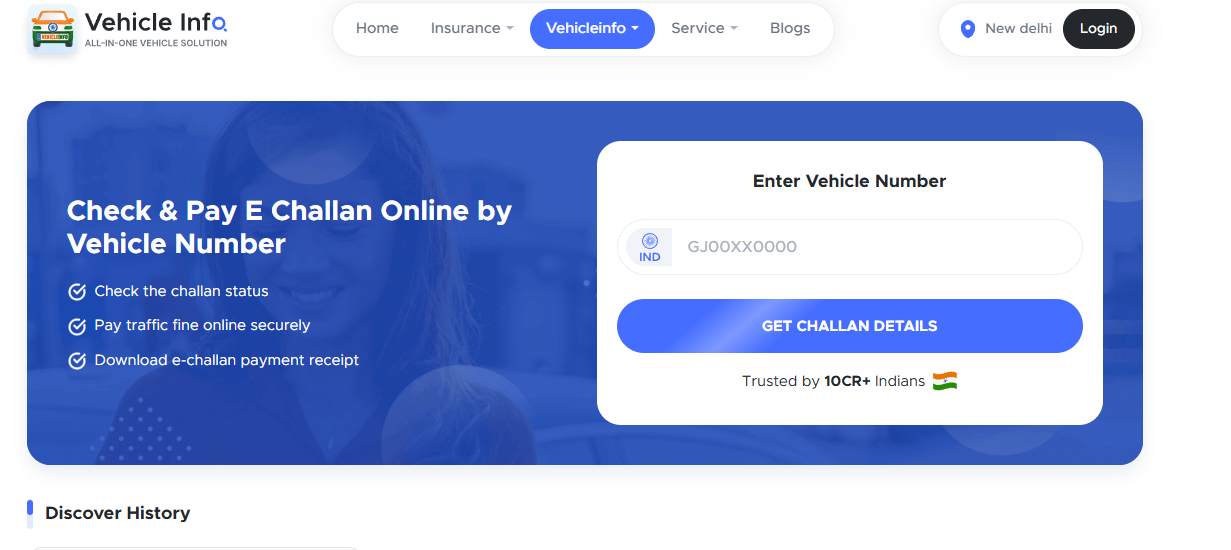
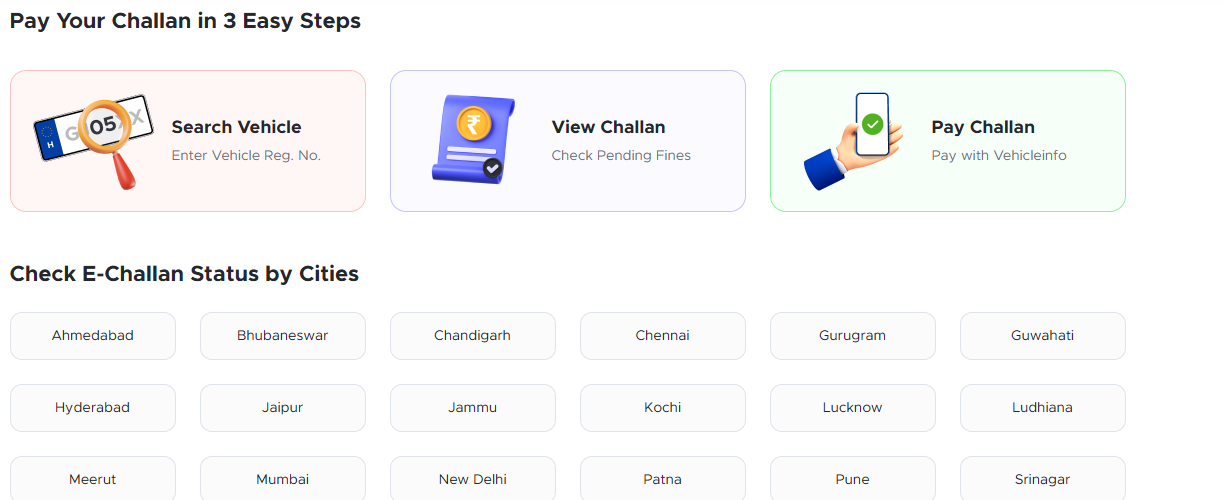
In India, vehicle owners can check eligible electronic challans through official government traffic-challan services. The exact process may differ depending on the state and enforcement system. Generally, the user needs to open the official challan portal and enter information such as the vehicle registration number, challan number, or driving licence number, depending on the options provided. After submitting the required details, the system can display available challans associated with the information.
Always verify that you are using an official government website or a trusted state traffic police portal. Avoid entering vehicle, driving licence, or payment information into unknown websites received through suspicious messages.
How to Pay a Traffic Challan Online
Online payment has made traffic-fine settlement considerably easier. After checking the challan details, the vehicle owner can select the available payment option on the official portal and follow the instructions. Depending on the portal, payment may be supported through methods such as debit cards, credit cards, internet banking, UPI, or other authorized digital payment methods. Before completing the transaction, verify the challan number, vehicle number, offence details, and amount displayed on the payment page. After successful payment, save the transaction receipt or acknowledgement. It can be useful if the payment status does not update immediately or if proof of payment is required later.
What Happens After Paying the Challan?
Once the payment is completed successfully, the challan status should generally be updated in the relevant system. However, online systems may sometimes take time to reflect a completed transaction. Vehicle owners should keep the payment reference number and receipt until the challan is shown as paid. If money has been deducted from the bank account but the challan remains unpaid, avoid making another payment immediately. First, check the transaction status and follow the official portal’s procedure for failed or pending payments.
What If You Believe the Challan Is Wrong?
Sometimes a vehicle owner may believe that a challan was issued incorrectly. For example, the vehicle may not have been at the stated location, the registration number may have been entered incorrectly, or the available evidence may not match the reported violation.
In such situations, do not simply ignore the challan. Check whether the official portal provides an option to raise a grievance, contest the challan, or request a review. If the matter has been referred to a court or virtual court, follow the instructions provided in the official record. Keep relevant evidence, such as payment records, vehicle documents, photographs, or other information that may help explain the issue.
Traffic Challans and Virtual Courts
Certain traffic offences may be connected with the virtual-court system. When a challan is forwarded to a court, the procedure may differ from a normal online payment. The vehicle owner should carefully read the instructions displayed on the official portal. If the challan has been transferred to a court, attempting to use an ordinary payment route may not be appropriate. Follow the official instructions regarding payment, appearance, or contesting the matter.
What Happens If You Do Not Pay a Traffic Challan?
Ignoring an outstanding traffic challan can lead to additional administrative or legal complications depending on the offence and applicable rules. An unpaid challan may remain recorded against the vehicle or person concerned, and further proceedings may be initiated in eligible cases.
Therefore, vehicle owners should periodically check their challan status and resolve genuine outstanding fines through the appropriate official process. If a challan is disputed, use the available grievance or legal procedure rather than simply leaving it unpaid.
Important Traffic Documents to Keep Updated
Following traffic rules is not limited to avoiding fines. Drivers should ensure that their essential vehicle and driving documents remain valid. Depending on the applicable requirements, these can include a valid driving licence, vehicle registration, insurance, and pollution-related certification.
Digital document systems may also allow eligible records to be accessed electronically. However, drivers should understand the current requirements applicable to their vehicle and location and keep the necessary documents valid and accessible.
How to Avoid Traffic Fines
The simplest way to avoid traffic challans is to follow traffic rules consistently. Drivers should observe speed limits, obey traffic signals, wear seat belts or helmets as applicable, avoid using mobile phones while driving, and follow lane and parking regulations.
Vehicle owners should also maintain their vehicles properly and ensure that required documents are valid. Defensive driving, patience at intersections, and awareness of pedestrians and other road users can reduce the risk of accidents as well as traffic violations.
Beware of Fake Traffic Challan Messages
With the increasing use of digital challans, scammers may send fake SMS messages, emails, or links claiming that a traffic fine is pending. Such messages may attempt to collect personal information, banking details, or payment credentials.
Never click suspicious payment links simply because they mention a vehicle number or traffic fine. Instead, independently open the official government traffic-challan portal and check whether a genuine challan exists. Do not share OTPs, PINs, passwords, or banking credentials with anyone claiming to be a traffic official.
Tips Before Making an Online Challan Payment
Before paying a traffic fine online, verify the website address and make sure it belongs to an official authority. Check the vehicle number, challan number, offence description, date, location, and fine amount.
After payment, save the receipt and transaction reference. If the status remains pending, allow reasonable processing time and check the official payment status before attempting another transaction. These simple precautions can help prevent duplicate payments and reduce the risk of online fraud.
Difference Between a Traffic Fine and a Challan
The terms “traffic fine” and “traffic challan” are often used interchangeably, but they refer to slightly different concepts. A fine is the monetary penalty associated with a traffic violation, while a challan is the record or notice documenting the violation and the applicable penalty.
For example, if a driver is recorded for a particular traffic offence, the enforcement authority may create a challan containing the violation details and the corresponding fine. The driver can then follow the prescribed process to pay or contest it.
Final Words
Traffic challans are an important part of road-rule enforcement and are intended to encourage responsible driving. Understanding how challans are issued, how to check them online, how to make payments, and how to raise a dispute can help vehicle owners handle traffic fines more efficiently.
Always use official government or traffic-police channels when checking or paying a challan. Keep your driving licence and vehicle documents valid, follow traffic regulations, and maintain records of online payments. Most importantly, never trust an unfamiliar payment link merely because it claims to be connected with a traffic fine. Checking the information through an official portal is the safest way to confirm whether a challan is genuine and what action is required.